Will the smell of paint harm my children?


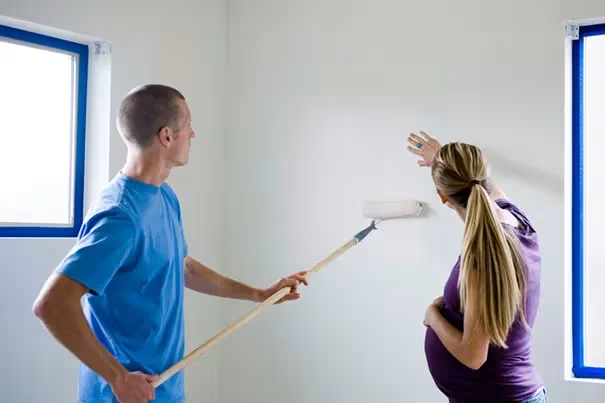
When planning to repaint your home, especially with a baby or young child around, it’s natural to wonder: Is paint smell harmful for babies? Paint products often contain chemicals that can emit strong fumes. While the fresh look is satisfying, the impact of those smells on your child’s health needs careful consideration. One of the main concerns for parents is paint fumes and baby being exposed to it, particularly when ventilation is poor or large areas are being painted.
Paints can contain volatile organic compounds (VOCs)—gases that release into the air as the paint dries. These compounds are what give off that recognisable “new paint” smell. While brief exposure to paint fumes isn’t usually a major concern, babies are more sensitive due to their developing lungs and immature immune systems. Prolonged or heavy exposure can affect air quality and potentially irritate a baby’s sensitive respiratory system.

Is the Smell of Paint Fumes Harmful for Children?
"The paint smell is not really dangerous for brief exposures. There would be a concern if the babies were exposed daily for a long period. However, the odor of fresh paint can be irritating and unpleasant. I generally advise parents to open windows if possible when rooms are being painted, or even to stay at a grandparent or friend's house for a few days, especially if the house or most rooms are being painted. If you're just painting one room at a time, try to keep the babies out of that room for a few days, and open windows when possible."
Answered by: Linda Jonides, R.N., C.P.N.P.
In short, paint smell for babies is not considered dangerous in the short term, especially with good ventilation. However, babies have delicate lungs and underdeveloped immune systems, so minimising exposure is still best. If your child has allergies or asthma, be extra cautious. Many experts recommend not allowing your baby into a freshly painted room for at least 2–3 days.
How to Choose Baby-Safe Paints
Choosing the right paint can make a big difference in reducing potential harm. Here's how to ensure you’re selecting baby-safe paint:
By making safer choices, you can significantly reduce concerns surrounding paint fumes and babies.
What Health Effects Can Paint Fumes Have on Your Child?
While there’s no need to panic about occasional exposure, understanding the possible health effects helps in making informed decisions. Parents often ask, ‘Is paint smell bad for babies?’ Here are some possible short-term effects of paint exposure:
Long-term exposure to high-VOC paints may pose more serious health risks, though this is rare in typical home settings. Still, it's better to err on the side of caution. So, how long after painting is it safe for baby? Ideally, wait 48 to 72 hours before allowing your baby into the freshly painted room. Keep windows open during and after painting to improve air circulation and help fumes dissipate faster.

Conclusion
While the paint smell for babies isn’t inherently dangerous in small doses, taking precautions can help you avoid any discomfort or health issues. When repainting with children around, the best approach is choosing low-VOC paints, ensuring proper ventilation, and keeping babies out of the room until the smell fades.
So, to answer the question—is paint smell harmful for babies? The risk is low with short exposure and proper precautions. Still, being mindful of what products you use and when you introduce your baby back into the space ensures a safer, healthier home.
FAQs
Short-term exposure to paint fumes, especially from low-VOC or non-toxic paints, is generally not harmful. However, it’s best to keep babies in a well-ventilated space away from freshly painted areas to avoid any irritation. If you're wondering, ‘Ispaint smell harmful for babies?’—brief exposure is typically safe, but precautions help ensure comfort and well-being.
Articles Related To Baby Proofing
- https://www.webmd.com/parenting/baby/how-to-choose-baby-safe-paint
- https://www.battlebornpainting.com/2021/02/16/3-tips-for-safely-painting-indoors-with-kids-around/
- https://www.webmd.com/parenting/baby/how-to-choose-baby-safe-paint#:~:text=Most%20modern%20paints%20are%20unlikely,choosing%20paint%20for%20your%20home.
- https://www.paintingservicesingapore.com/articles/can-the-smell-of-newly-house-painting-harm-my-baby-or-pets.html