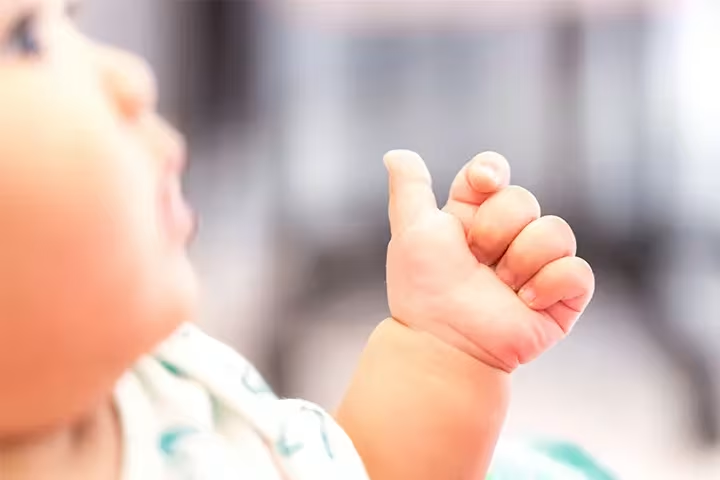
Learn How to Teach Your Baby Sign Language with Tips and Signs.


Teaching baby sign language to your little one could help you communicate with each other before your baby learns how to speak. Find out more about the potential benefits of baby sign language, get some tips for teaching it to your baby, and learn some of the basic signs that you can get started with.

What Is Baby Sign Language?
Baby sign language has become pretty trendy in the past 20 years—you probably know of some hit movies that have featured it! The popularity of sign language may be due in part to the fact that many babies can be taught to use their hands to "talk" sooner than they can learn speech. Of course, it will take time before your baby has the dexterity to use his hands in that way. Baby sign language may be a way for your baby to communicate starting at about 8 or 9 months old or a little later on. It's important to know that baby sign language is different from the sign language that is used by the hearing impaired. In some cases baby sign language uses modified gestures from American Sign Language, making it similar but not the same. Keep in mind that teaching your baby sign language is optional. It’s just one tool you could use to communicate with your little one at a time when your baby may have something to say but can’t yet communicate with speech.
When Should You Start Teaching Your Baby Sign Language?
You can start teaching baby sign language early in infancy—experts suggest starting at around 6 or 7 months. Just be aware that babies probably won’t be able to communicate using baby sign language until they are at least 8 months old.
Basic Baby Sign Language Chart
Check out the following baby sign language chart for some of the most practical signs you can teach your baby. Teaching her these signs may turn out to be useful, such as when she’s trying to express that she wants more milk or her dad.
How to Teach Basic Baby Sign Language
The good news is that learning baby sign language and teaching it to your little one isn't that difficult, though the process will require consistent effort, lots of repetition, and patience on your part. Here are some tips for teaching baby sign language to your baby:
For more on how to teach your little one baby sign language, consult your child’s healthcare provider, who may recommend a book or online course on the subject. There may even be classes at your local community center.

What Are the Benefits of Using Baby Sign Language?
Baby sign language can be a useful communication tool for babies, and also an ideal bonding opportunity for both of you. Baby sign language gives babies and young toddlers (between 8 months and 2 years) a way to communicate before they can say their first words. This may ease some of the frustration they might feel when they’re not able to say what they feel, want, or need yet. Knowing that your baby can convey some of those basic wants and needs through signing may take some of the guesswork out of parenting, too, as your little one will be able to tell you if she’s hungry or cold, for example.
Can Teaching Your Baby Sign Language Promote or Delay Speech?
There isn’t enough evidence yet to prove that baby sign language can help promote language development , literacy, or cognitive skills. However, there is a chance that it can benefit those babies who have developmental delays. Continuing to talk to your baby while also signing is important so your baby doesn’t fall behind in speech development. Contact your baby’s healthcare provider for personalized guidance on whether baby sign language is right for your little one.
The Bottom Line
Baby sign language can be an effective form of communication between you and your baby in those months before your baby or young toddler can express herself with speech. With consistent effort, you can teach your baby basic actions to sign that may help him communicate a specific want or need, like needing a drink or wanting more food to eat. It’s important to keep speaking to your little one alongside teaching baby sign language to ensure that her speech development stays on track. If you’ve decided baby sign language is something you’d like to teach your little one, find ways to make it fun and enjoy these shared bonding moments. Be consistent and stick with it. You’ll be so proud when you see your baby telling you something with his hands for the first time.
How We Wrote This Article The information in this article is based on the expert advice found in trusted medical and government sources, such as the American Academy of Pediatrics and the American College of Obstetricians and Gynecologists. You can find a full list of sources used for this article below. The content on this page should not replace professional medical advice. Always consult medical professionals for full diagnosis and treatment.
Articles Related To Baby Development
What Is the Moro Reflex in Babies?
Moro reflex: The Moro reflex is when your baby startles in reaction to the sensation of falling, such as when their head shifts suddenly. Learn causes, importance, and what to expect.
Read more
When Do Babies Start Clapping, Waving, and Pointing?
Learn when babies start clapping, waving, and pointing. Discover milestone timelines and practical tips to encourage and support your baby’s exciting developmental journey.
Read more
When Do Babies Start Laughing?
Want to know when babies start laughing? Read this guide to find out when your baby will laugh for the first time and how to keep the giggles coming with some tried-and-true ways to make a baby laugh.
Read more
Baby talk: making sense of it all
Understanding what your baby is trying to communicate with you at an early age can be both entertaining and frustrating.
Read more
When Do Babies Start Talking?
If you are wondering when do babies start talking, then here are details about when do babies say their first words, baby talking timeline & how to communicate with them.
Read more
How Positive and Proactive Discipline Can Help Change Your Child's Behavior
Effective ways to manage your child’s outbursts with key tools: understanding power, setting boundaries, consistency, and positive discipline. Learn more here!
Read more
When Do Babies Start Smiling?
when your baby's first genuine smile appears in their developmental journey. Learn about the milestone moments and joyful expressions along the way.
Read moreWhat Is the Moro Reflex in Babies?
Moro reflex: The Moro reflex is when your baby startles in reaction to the sensation of falling, such as when their head shifts suddenly. Learn causes, importance, and what to expect.
Read moreWhen Do Babies Start Clapping, Waving, and Pointing?
Learn when babies start clapping, waving, and pointing. Discover milestone timelines and practical tips to encourage and support your baby’s exciting developmental journey.
Read moreWhen Do Babies Start Laughing?
Want to know when babies start laughing? Read this guide to find out when your baby will laugh for the first time and how to keep the giggles coming with some tried-and-true ways to make a baby laugh.
Read moreBaby talk: making sense of it all
Understanding what your baby is trying to communicate with you at an early age can be both entertaining and frustrating.
Read moreWhen Do Babies Start Talking?
If you are wondering when do babies start talking, then here are details about when do babies say their first words, baby talking timeline & how to communicate with them.
Read moreHow Positive and Proactive Discipline Can Help Change Your Child's Behavior
Effective ways to manage your child’s outbursts with key tools: understanding power, setting boundaries, consistency, and positive discipline. Learn more here!
Read moreWhen Do Babies Start Smiling?
when your baby's first genuine smile appears in their developmental journey. Learn about the milestone moments and joyful expressions along the way.
Read moreWhat Is the Moro Reflex in Babies?
Moro reflex: The Moro reflex is when your baby startles in reaction to the sensation of falling, such as when their head shifts suddenly. Learn causes, importance, and what to expect.
Read more