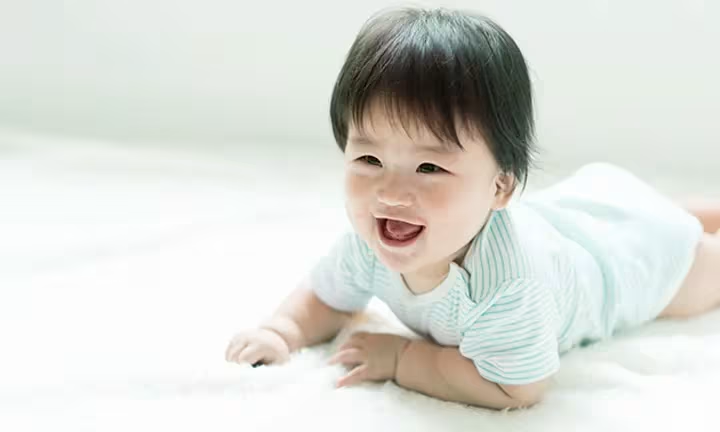
When Do Babies Start Cooing? All About Your Baby’s First Sounds


One of the most cherished moments of parenting is hearing your baby’s first sounds! You don’t have to wait long, as even newborns make adorable noises. But when do babies start cooing and making other sounds? Read on to learn all about when this special milestone is likely to occur and how to support your baby’s language development.

What Is Cooing?
Cooing refers to single-vowel sounds, such as “ooh” and “aah.” Sometimes the noise your baby makes sounds like the word “coo,” which is where the action gets its name. A cooing baby is making their first attempt at expressive language, which is why this is such an exciting development milestone for your little one! Though you’ll likely hear other baby noises before cooing starts, common crying and grunting are sounds that originate from the chest. Cooing comes from the larynx, the organ in the neck that contains the vocal cords, and involves different mouth muscles than crying does. Cooing is obviously adorable, but why do babies make noises like this? Baby cooing is a way for children to express happiness and contentment before speaking. Your little one might also coo for self-entertainment or to get your attention.
When Do Babies Start Cooing?
Baby cooing may start when your little one is around 2 months. But every child is different and develops at their own pace, so your baby might start to coo earlier or later than other children, and that’s OK. Like every other language milestone, baby cooing takes time to develop. By about 1 month, your baby might be able to identify you by your voice, even if you're not in the same room. When you speak to your little one, they may begin to smile and gurgle at you; your delighted reaction helps teach them the concept of a two-way "conversation." Creating new sounds such as cooing is the next step for your baby. Before long, they'll be using their tongue and lips to create even more precise sounds. Your little one has already come a long way in terms of language development and communication, but the adventure has just begun!
In Summary
So, at what age do babies start cooing? Many babies will produce cooing noises around 2 months old, but it’s OK if this milestone occurs earlier or later.

Baby Noises: From Grunting to Talking
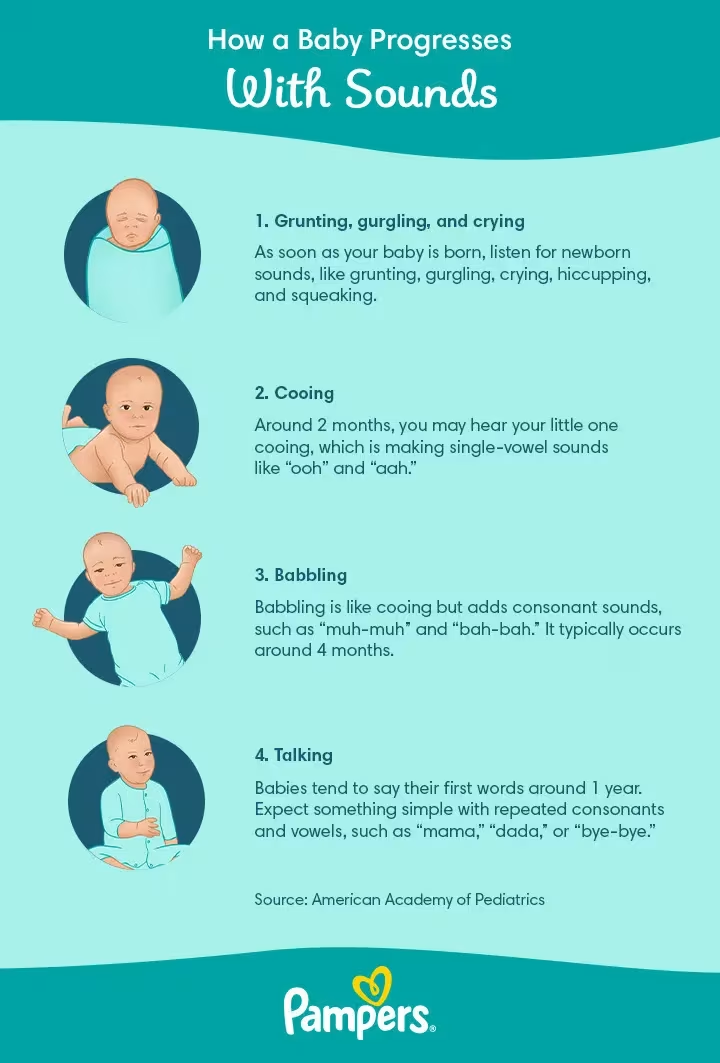
After “when do babies start cooing?” comes the question “when do babies start talking?” Your little one is rapidly developing language and communication skills, and it might help to understand what they’re experiencing. So, when do babies start making sounds, and how does a baby go from gurgling to cooing to speaking? Here’s a brief timeline of what many refer to as “baby talk”: 1. Grunting, gurgling, and crying. Your baby’s spoken language development involves these initial newborn sounds. Even within your infant’s first few days, you’ll likely hear a mix of crying, grunting, squeaking, sighing, sneezing, and hiccupping, among other cute noises. As mentioned above, these natural sounds come from your baby’s chest.
2. Cooing. The next step is cooing, which means that your baby will use some different muscles than they did with crying and grunting. Language development typically mirrors fine motor skill development in that it originates from the center and progresses outward, with fine-tuning along the way. Baby sounds begin within the chest, eventually moving to the larynx, tongue, and lips.
3. Babbling. While cooing involves single-vowel sounds, babbling is when your baby starts to include consonant sounds. Those “oohs” and “aah” become “muh-muh” and “bah-bah.” Though these new sounds might seem random at first, when you listen closely you may notice some patterns and rhythms or hear your baby raise and lower their voice. This milestone is common at around 4 months.
4. Talking. Babies don’t typically say their first recognizable words until they are at least 1 year or older. Most likely, the first word will be a simple one with consonants and vowels that they’ve heard repeatedly, such as “mama,” “dada,” or “bye-bye.” Before saying specific words, babies might understand them—in fact, babies understand more than we think! You might spot your little one reacting when you say “no” or “bottle” or when or when you use the signs for these common words if you've chosen to introduce baby sign language to them.
In Summary
What is an infant’s first means of communication, and how do babies communicate? Infants and newborns start by making noises like gurgling and grunting before cooing and babbling occur. But each step supports the next, from baby sounds to cooing to babbling to talking, so enjoy the ride!
Learn more about how “baby talk” influences language development in the video below:
How to Encourage Baby Cooing and Support Language Development
Baby cooing is an exciting and endearing language development milestone, and you might be wondering how to support and encourage your little one's progress. Here are a few things you can do to encourage those sweet baby cooing sounds:
RELATED ARTICLEDEVELOPMENT Crib Talk: Talking at Bedtime
Baby Not Cooing: What Does It Mean?
If you’ve passed the 2-month mark and your baby is not cooing, there isn’t necessarily any reason to worry. As mentioned above, children develop at their own pace, and some reach these typical milestones later than others. Contact your child's healthcare provider if you have any questions or concerns. Instead of focusing on cooing alone, pay attention to your baby’s range of sounds. Call your child’s healthcare provider if your baby isn’t producing various sounds by 6 months, or if they’re not babbling or imitating sounds by 7 months.
FAQS AT A GLANCE
Babies develop at different rates, so cooing can occur at any time around 2 months old. Your little one might start cooing earlier or later, which is completely normal.
The Bottom Line
Baby cooing is just one step in your little one’s long language journey. But it’s certainly an important achievement, as it’s your baby’s first attempt at expressive language. Feel free to celebrate and enjoy this milestone, knowing there’s much more to come! In anticipation of this memorable achievement, you might ask, “When do babies start cooing?” and want an exact answer. Remember that babies develop at their own pace, so not every child will start cooing at the same age. Typically, babies start making cooing sounds around 2 months old, but it can occur earlier or later. The best way to encourage and support your child’s cooing and language journey is to talk to them from birth. Babies learn to talk before they can actually speak by listening to you! You can also read picture books, describe situations, and use consistent language.
Remember that your little one is on their own path, and cooing, babbling, and talking will all come in time. Contact your child's healthcare provider if you have any questions or concerns. “Diaper” might be a frequently used vocabulary word at the moment! Make diaper changes a little easier by exchanging coos with your baby, and reward yourself for every purchase with the Pampers Club app.
How We Wrote This Article The information in this article is based on the expert advice found in trusted medical and government sources, such as the American Academy of Pediatrics and the American College of Obstetricians and Gynecologists. You can find a full list of sources used for this article below. The content on this page should not replace professional medical advice. Always consult medical professionals for full diagnosis and treatment.
- Book: Caring for your baby and young child, birth to age 5, Seventh Edition Paperback – 2019, by American Academy of Pediatrics (Author)
- Book: Guide to Your Baby’s First Years, Second Edition Paperback – 2020 by Mayo Clinic, Walter J. Cook, M.D. Kelsey M. Klaas, M.D. (Authors)
Your 11 Month Old Baby’s Development & Activities
Your 11 month old baby is now ready to take her first step while holding onto furniture for support. So make sure your house is childproof! Know more about 11 month old baby activities & development on Pampers India!
Read more
Your 10 Month Old Baby’s Development & Activities
Your 10 month old baby will now become more mobile & independent & he may also be cautious about straying too far from you. To know more about 10 month old baby activities & development visit Pampers India!
Read more
When Do Babies Crawl?
Learn to spot the signs that your baby is preparing to crawl, also know the timeline when babies typically start to crawl, the different stages of crawling, and how to teach your baby to crawl.
Read more
Your 8 Month Old Baby’s Development & Activities
Your 8 month baby is growing stronger, understand how you can help your baby walk, speak words. To know more about 8 month old baby activities & development visit Pampers India!
Read more
Fine Motor Skills Development of Infants and Toddlers
Every kid has his own pace of fine motor skills development. Read on Pampers India to know how fine motor development activities will help your child.
Read more
Separation Anxiety in Babies
When do babies develop separation anxiety? Separation anxiety can start when your baby is about 8 months old. Learn more to know about separation anxiety.
Read more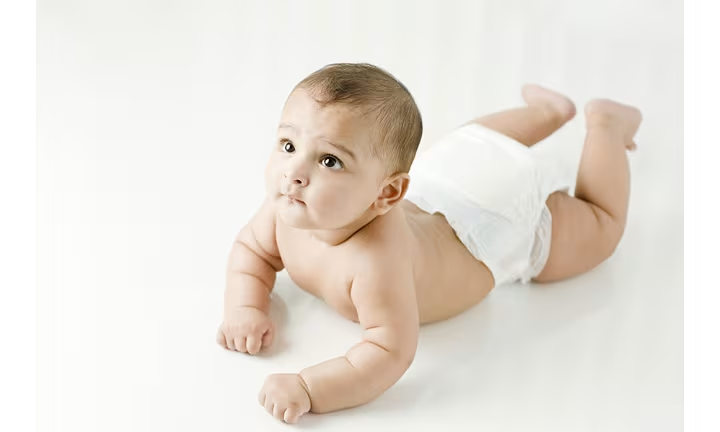
When Do Babies Start Crawling?
When do babies start crawling? In the second half of the first year, most babies are really starting to move. Learn how to encourage the little ones to crawl.
Read more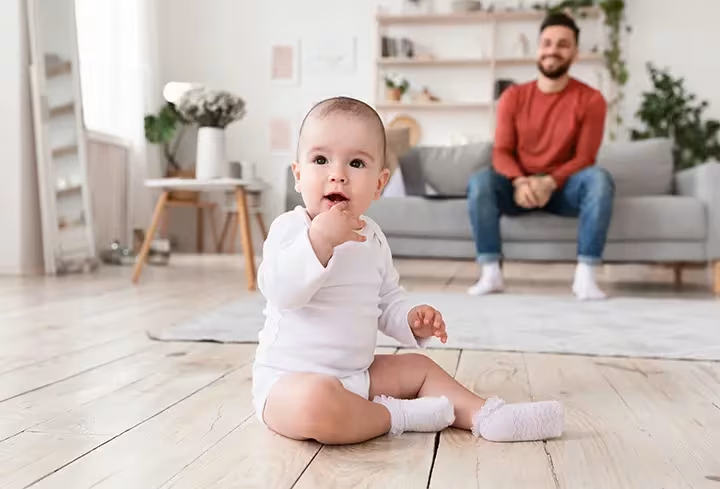
When Can Babies Sit Up By Themselves?
Find out at what age your baby might sit up on his own, learn the signs your baby is about to reach this milestone, and how to help your baby learn to sit up.
Read more
When Does the Change in Baby's Eyes Colour Occur?
When do babies eyes change colour? It could take about six to eight months for your baby’s eye colour to change after birth. Learn how genetics will influence the final eye colour.
Read more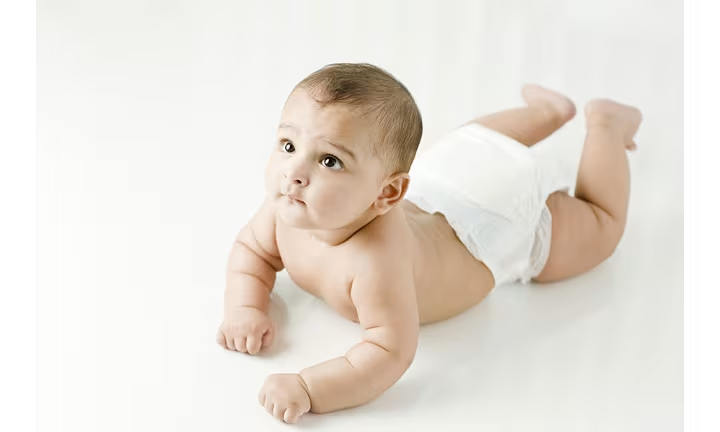
Baby Crawling 101: When do Babies Crawl & 5 Tips to Encourage
Crawling is like the bridge between a baby sitting and beginning to walk. Soon after your baby learns to roll, the little one also learns other ways and means of mobility. Click here to read more about baby crawling 101 on Pampers India
Read moreYour 11 Month Old Baby’s Development & Activities
Your 11 month old baby is now ready to take her first step while holding onto furniture for support. So make sure your house is childproof! Know more about 11 month old baby activities & development on Pampers India!
Read moreYour 10 Month Old Baby’s Development & Activities
Your 10 month old baby will now become more mobile & independent & he may also be cautious about straying too far from you. To know more about 10 month old baby activities & development visit Pampers India!
Read moreWhen Do Babies Crawl?
Learn to spot the signs that your baby is preparing to crawl, also know the timeline when babies typically start to crawl, the different stages of crawling, and how to teach your baby to crawl.
Read moreYour 8 Month Old Baby’s Development & Activities
Your 8 month baby is growing stronger, understand how you can help your baby walk, speak words. To know more about 8 month old baby activities & development visit Pampers India!
Read moreFine Motor Skills Development of Infants and Toddlers
Every kid has his own pace of fine motor skills development. Read on Pampers India to know how fine motor development activities will help your child.
Read moreSeparation Anxiety in Babies
When do babies develop separation anxiety? Separation anxiety can start when your baby is about 8 months old. Learn more to know about separation anxiety.
Read moreWhen Do Babies Start Crawling?
When do babies start crawling? In the second half of the first year, most babies are really starting to move. Learn how to encourage the little ones to crawl.
Read moreWhen Can Babies Sit Up By Themselves?
Find out at what age your baby might sit up on his own, learn the signs your baby is about to reach this milestone, and how to help your baby learn to sit up.
Read more