When Do You Get Your First Period After Having a Baby?


Your baby has finally arrived, and while you rest and recover from giving birth, you’re busy adjusting to the many changes and new experiences that are coming your way. One such change that often goes unmentioned is the return of your menstrual cycle. This article aims to shed light on this less-discussed aspect of postpartum life and equip you with the knowledge you need to navigate this transition confidently. We'll guide you through everything you need to know, from understanding when you might get your first period after giving birth to learning how your menstrual cycle might differ after pregnancy.

When Do You Get Your First Period After Birth?
Timing is likely to be on your mind, and you may be wondering, “How long after birth do you get your period?”
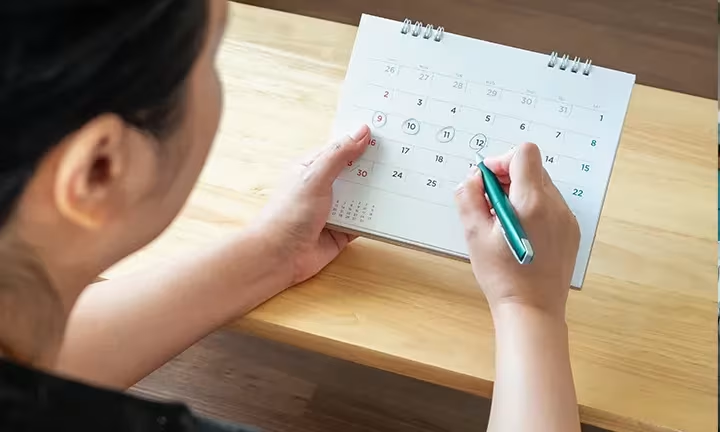
Well, every person is different, their menstrual periods included. It's likely that your first menstrual period may appear about six to eight weeks after the birth of your baby. In some cases, it could show up sooner than that.
When Do You Get Your Period After Birth While Breastfeeding?
So, when does a menstrual period start after birth if you’re breastfeeding your baby? If you’re exclusively breastfeeding your new arrival, your menstrual period will likely take longer to return than if you weren’t breastfeeding. In some cases, menstruation may take months to return or may not resume until a baby is weaned (depending on how long you decide to breastfeed). The lack of menstruation during breastfeeding is called lactational amenorrhea.
Does Your Menstrual Period Affect Breast Milk?
Getting your period has not been shown to affect breast milk production or quality; however, it’s possible for breast milk production to fluctuate at certain points in your menstrual cycle due to changes in hormonal levels. Hormonal changes may also cause your breasts to become more tender, which can make breastfeeding uncomfortable.
How Your First Period Postpartum Might Be Different
Some new parents may wonder if their first period after birth will be different than the periods they had before pregnancy. It's not uncommon to ask, “Is your first period after having a baby heavy?”
Your first menstrual period after birth may or may not be different from what you experienced before pregnancy. It could be shorter or longer than before, lighter or heavier than usual, or you might have more or less cramping than what you previously considered normal. You may notice some irregular periods after birth for your first few cycles, but in many cases, your periods gradually return to “normal” (what was normal for you before pregnancy).
In terms of birth control after pregnancy, it's helpful to know that some contraceptive pills may result in lighter or shorter periods and reduced menstrual cramps.
How Long “Should” Your First Period Last After Giving Birth?
After giving birth vaginally or having a c-section, how long does your first menstrual period last? The duration of your first period after having a baby can vary widely and depends on your individual body. It can range from a few days to a full week. Just like before pregnancy, some will have longer periods, and some will have shorter ones. It may take a few cycles for your period to settle into a new regular pattern.
If your first period after having a baby seems excessively long or is very heavy with large clots, it's a good idea to check in with your healthcare provider.
When Can You Use Tampons After Birth?
If you have your first menstrual period within six weeks of a vaginal birth or after a c-section (cesarean section), medical experts recommend avoiding the use of tampons. Instead, it's best to wear pads for at least six weeks, especially when experiencing lochia (a vaginal discharge after birth) or any other form of bleeding, such as the first menstrual period.
Before using tampons, check in with your healthcare provider to ensure the area has healed fully.
Can You Get Pregnant Before Your First Menstrual Period Postpartum?
If you’ve had no period after giving birth, it’s common to wonder, “Can I get pregnant?” The answer is yes, it’s possible to get pregnant before your period returns. If you aren't breastfeeding exclusively and your body has had enough time to recover from pregnancy, then ovulation can occur even if you haven't yet had a period. So, it's important to consider this with your partner and discuss your birth control options with your healthcare provider if you don't want another baby right away.
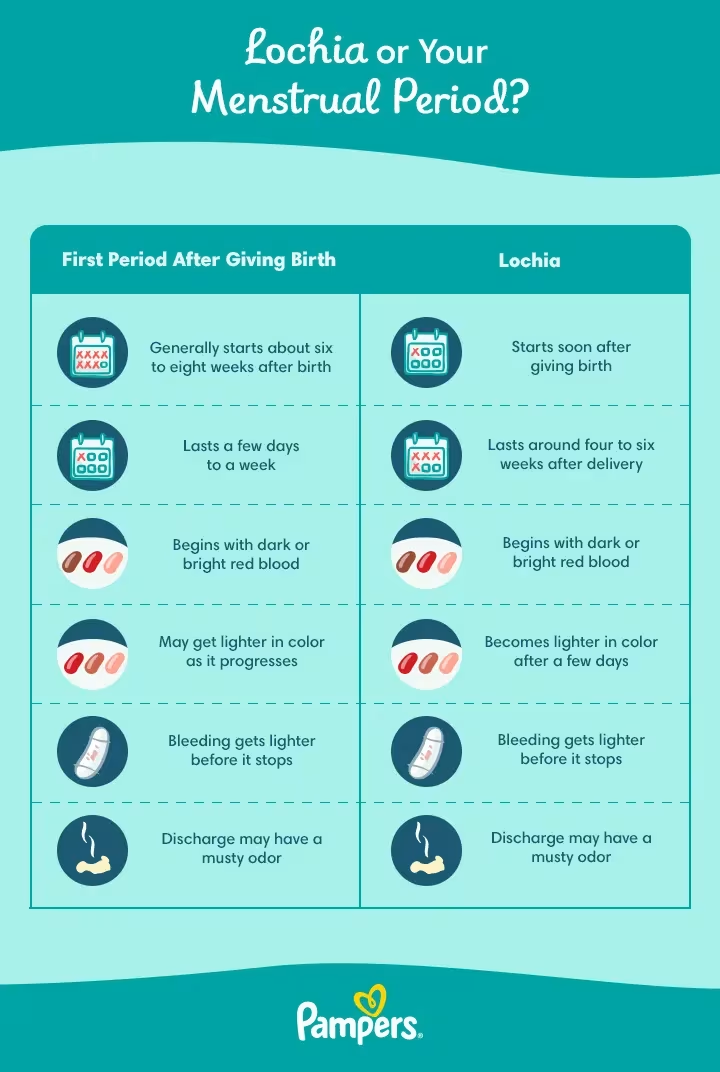
Are You Experiencing Lochia or Your Period?
It's important to distinguish between your first menstrual period after birth and lochia, which is the vaginal discharge that begins shortly after giving birth. Lochia and your menstrual period appear similar: both generally start with dark or bright red blood and get lighter before stopping. Other points to keep in mind are the following:
If you're not sure whether you’re experiencing lochia or your period after pregnancy, contact your healthcare provider for clarification.
When to Contact Your Healthcare Provider
If you experience extreme pain, unusually heavy bleeding that soaks through multiple pads or tampons hourly, blood clots larger than a plum, or foul-smelling vaginal discharge, you should contact your provider immediately.
It’s natural to worry when you have no period after pregnancy; however, remember that it could take about six to eight weeks for your first menstrual period to return after giving birth, and even longer if you’re exclusively breastfeeding. If you’re not breastfeeding and your period hasn’t returned after three or more months, contact your provider for more advice.
FAQS AT A GLANCE
Your first period after having a baby may or may not be different from what you experienced before pregnancy. It might be heavier or lighter, and you may have more or less cramping than normal. It can last anywhere from a few days to a full week.
The Bottom Line
The arrival of your first period after having a baby is one of the many ways your body is adjusting to this new phase in your life. It's important to pay attention to your menstrual periods as they start postpartum, as well as note the difference between lochia and your period and understand when to contact your healthcare provider.
While it may take some time for your body to adjust, keeping track of any changes will help you make sure everything is going as expected. With the right knowledge and care, you'll be ready when your first postpartum menstrual period arrives.
Read our postpartum articles to find out more about what happens in the postpartum period and the healing process after childbirth.
How We Wrote This Article The information in this article is based on expert advice found in trusted medical and government sources, such as the American Academy of Pediatrics and the American College of Obstetricians and Gynecologists. You can find a full list of sources used for this article below. The content on this page should not replace professional medical advice. Always consult medical professionals for full diagnosis and treatment.
Articles Related To Labour & Delivery
- American College of Obstetricians and Gynecologists, Your Pregnancy and Childbirth: Month to Month, 7th ed. (Washington, DC: American College of Obstetricians and Gynecologists, 2021).
- Cleveland Clinic. “Do Your Periods Change After Pregnancy?”
- Cleveland Clinic. “Lochia.”
- Cleveland Clinic. “Menstrual Cycle.”
- Cleveland Clinic. “Physical Changes After Delivery.”
- La Leche League International. “Menstruation and Breastfeeding.”
Prenatal Ultrasounds
Discover the significance of prenatal ultrasounds, an unforgettable moment for parents-to-be. Learn all about ultrasound scans during pregnancy with insights from Pampers In.
Read more
Preparing For Labor and Delivery
Retrieving data. Wait a few seconds and try to cut or copy again.
Read more
What to Expect After Birth
Get prepared for postpartum with our essential checklist. Navigate the whirlwind of delivery room activity confidently. Learn about breastfeeding after birth & postpartum care.
Read more
The Full Prenatal Care Guide
Prenatal care guide: Ensure a healthy pregnancy with expert advice from a prenatal care doctor. Discover how Pampers IN can support your journey.
Read more
Lochia: Is Postpartum Bleeding Normal?
Postpartum bleeding, known as lochia, is a part of your body’s natural recovery mechanism. Click here on Pampers India to know more about what bleeding after delivery entails!
Read more
What to Expect from a 6-Week Ultrasound? 3D and 4D Scans Explained
At 6 weeks pregnant? Explore the benefits of a 3D ultrasound and 4D scan. Get insights into your baby's development during your 6-week ultrasound appointment.
Read more
Benefits of postpartum massages for new mothers
Discover how postpartum massages aid recovery, reduce stress, relieve pain, and promote better sleep after delivery for new mothers.
Read more
20 Affirmations to Prepare for Labour and Delivery
Empower yourself with pregnancy affirmations for a calm labor, positive birth experience, and a confident mindset for delivery.
Read more
What Is a Mucus Plug, and What Happens When You Lose It?
Learn about the mucus plug during pregnancy, including what its role is, what losing your mucus plug could mean, and how these changes indicate labor.
Read more
What Are 3D and 4D Ultrasound Scans?
Discover the enhanced clarity of 3D and 4D ultrasound scans in pregnancy. Learn all you need to know about these advanced imaging techniques, with insights from Pampers IN.
Read morePrenatal Ultrasounds
Discover the significance of prenatal ultrasounds, an unforgettable moment for parents-to-be. Learn all about ultrasound scans during pregnancy with insights from Pampers In.
Read morePreparing For Labor and Delivery
Retrieving data. Wait a few seconds and try to cut or copy again.
Read moreWhat to Expect After Birth
Get prepared for postpartum with our essential checklist. Navigate the whirlwind of delivery room activity confidently. Learn about breastfeeding after birth & postpartum care.
Read moreThe Full Prenatal Care Guide
Prenatal care guide: Ensure a healthy pregnancy with expert advice from a prenatal care doctor. Discover how Pampers IN can support your journey.
Read moreLochia: Is Postpartum Bleeding Normal?
Postpartum bleeding, known as lochia, is a part of your body’s natural recovery mechanism. Click here on Pampers India to know more about what bleeding after delivery entails!
Read moreWhat to Expect from a 6-Week Ultrasound? 3D and 4D Scans Explained
At 6 weeks pregnant? Explore the benefits of a 3D ultrasound and 4D scan. Get insights into your baby's development during your 6-week ultrasound appointment.
Read moreBenefits of postpartum massages for new mothers
Discover how postpartum massages aid recovery, reduce stress, relieve pain, and promote better sleep after delivery for new mothers.
Read more20 Affirmations to Prepare for Labour and Delivery
Empower yourself with pregnancy affirmations for a calm labor, positive birth experience, and a confident mindset for delivery.
Read more